

Key Takeaways:
Global fertiliser markets are facing pressure from Middle East supply disruption, higher energy costs, and shipping uncertainty.
Australia is vulnerable to fertiliser supply disruptions as 90% of nitrogen fertilisers and almost 70% of phosphate fertiliser being imported between 2019 and 2023.
For Queensland exporters, higher fertiliser costs can impact crop margins, production decisions, contract pricing and export competitiveness.
Forecasts for dryer weather across producing regions may increase production pressures on farmers, further reinforcing reliance on diesel and fertiliser to plant and grow crops. Supply strain resulted from the Middle East conflict is evolving into higher input costs and supply uncertainty with is highly likely to impact essential agricultural outputs, including grains. Other agricultural sectors are being impacted, such as red meat and poultry production which rely on grains for feed.
What is happening in global fertiliser markets?
Conflict in the Middle East and the closure of the Strait of Hormuz has impacted shipping in the region and severely impacted global supply chains.
Around half of the world’s sulphur (key input for phosphate fertilisers) is produced in the Gulf region and shipped through the Strait of Hormuz. Prior to the conflict, the sulphur market was already constrained due to its use in heavy industries, such as battery processing.
These conditions, combined with the commencement of conflict and closure of the Strait, have resulted in higher costs and impacts to profitability resulting inmajor global producers (including Mosaic - US based) reducing production.
Nitrogen fertilisers, including urea, are specifically exposed as natural gas is a major production input. Urea prices rose above US$850 per metric tonne in April 2026, up 80% since February.
The current supply pressures are impacting different fertilisers in different ways:
- Urea and other nitrogen fertilisers are most exposed to natural gas prices and Middle East production disruptions.
- Phosphate fertilisers, such as Diammonium Phosphate (DAP) (see below) is impacted by inputs including ammonia and sulphur.
- Potash fertilisers are less directly exposed to the Middle East but can still be impacted if farmers reduce overall fertiliser use due to higher costs.
It is important to note that fertilisers are not interchangeable as plants need specific nutrients.
Nitrogen, Phosphorus and Potassium each serve a different role:
- Nitrogen (e.g. urea) drives leaf and stem growth
- Phosphorus (e.g. DAP) supports root development and early establishment
- Potassium (e.g. potash) helps regulate water use, resilience, and crop quality
Farmers tailor fertiliser blends based on factors including soil, crop, and conditions. This means potassium cannot replace nitrogen or phosphorus during shortages, as each nutrient meets a distinct plant need.
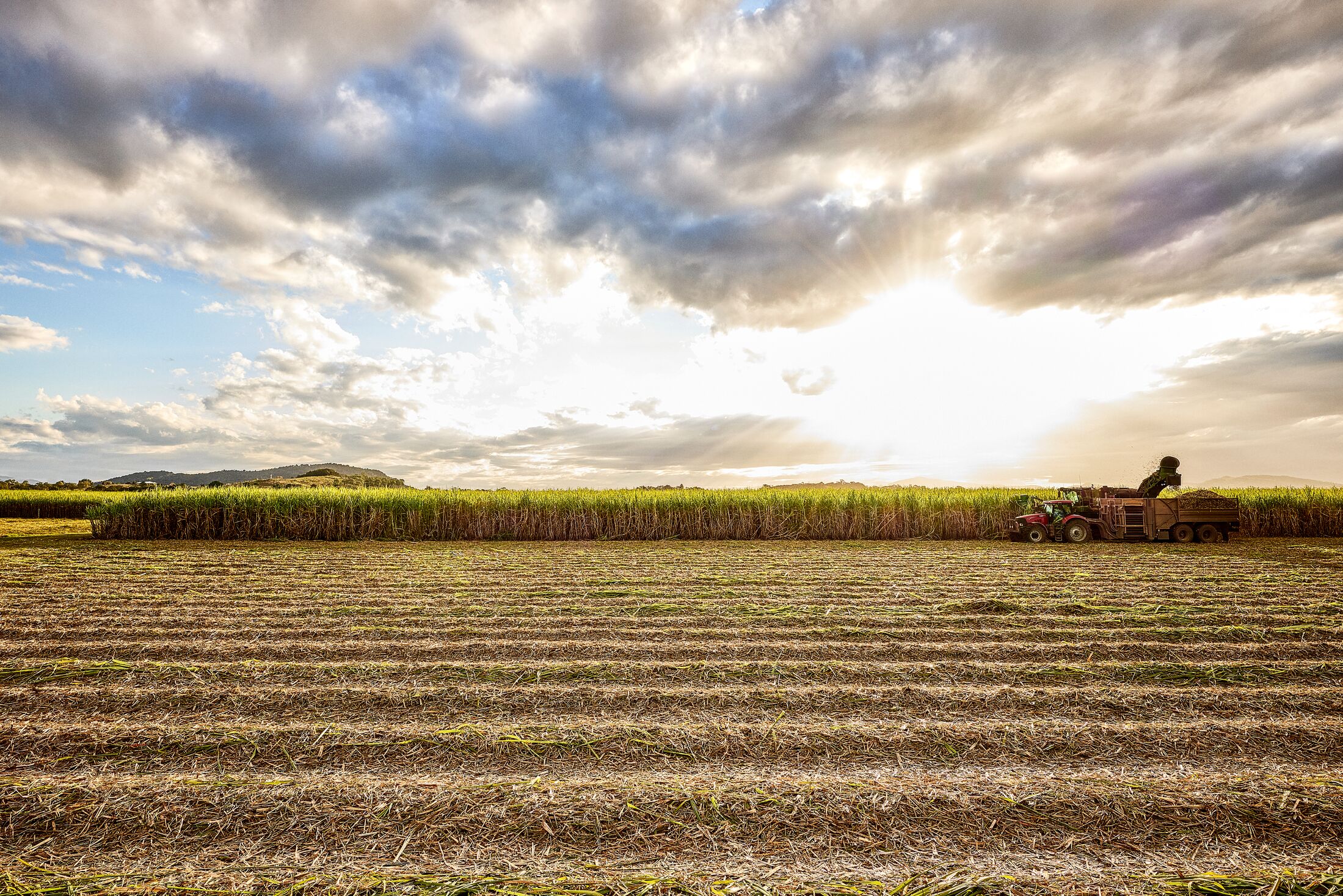
This is particularly important for Queensland’s fertiliser-intensive agricultural and horticultural industries, including sugarcane and grains, where nutrient use is guided by soil testing and at time, regulated by requirements such as reef limit catchments.
Why does this matter for Australia?
In 2024, Australia imported approximately 3.85 million tonnes of urea – the largest suppliers being the United Arab Emirates (UAE), Qatar, Saudi Arabia, Indonesia and Oman. Together, Gulf producers supplied approximately 2.6 million tonnes of Australia’s urea imports (68% of the total by volume).
Reliance on a single region for majority of fertiliser imports, exposes Australia to supply disruptions in the Gulf region. Heightening this with the lack of domestic production, farmers and agribusiness are more vulnerable to global price fluctuations, with increased flow through to input costs.
Gulf producers supply 70% of Australia’s nitrogen-based fertiliser imports and shipments from these producers have effectively been halted. April 2025, Australia imported 600,000 tonnes of urea from global producers (predominantly Gulf producers). April 2026, Australia imported approximately half (300,000 tonnes of urea), with only one ship from the Middle East.
As fertiliser prices have increased significantly, it is estimated overall fertiliser prices could rise more than 30% during 2026, with nitrogen fertilisers seeing the greatest increases.
Why does this matter for Queensland?
Queensland’s agriculture sector is highly reliant on imported fertilisers due to the closure of domestic manufacturing facilities, further increasing import reliance for production. Queensland producers remain exposed to global supply disruptions, geopolitical instability and price volatility.
Accessing support
- Visit the Queensland Exporter Academy to access support for each stage of the export journey
- Register for upcoming webinars and briefings
- Share resources within your organisation or export network