

It’s the superpower nutrient said to fend off colds and flu, reduce risks of cancer, controls blood pressure, and an array of other magical properties.
Vitamin C is a hero antioxidant present in many fruits and vegetables. But the Kakadu Plum, native to Australia, provides up to 100 times more vitamin C than oranges.
Today, many Australian and Queensland products featuring native botanicals at their core are gaining growing international demand. Queensland’s Davidson’s Plum which thrives in the state’s rainforests, also contains Vitamin E, zinc, potassium and magnesium.
These are not the only native botanicals blooming in popularity overseas.
Lemon myrtle, which is said to boost the immune system, relieve respiratory congestion and other antioxidant qualities, is one of many botanicals seeing great demand internationally. Markets including Europe, Korea and Japan are increasingly seeking products that are authentic, traceable and distinct.
Australia supports over 25,000 native plant species, with Queensland alone hosting about 2,400 fruiting rainforest varieties.
Newly identified superfoods often trigger rapid surges in interest for natural ingredients, catapulting them onto the world stage and driving intense consumer demand. As a result, familiar products are reinvented to incorporate these high‑impact ingredients, fast‑tracking them into mainstream attention.
Native botanicals are incorporated into food, nutraceuticals, cosmetics and extracts.
In Queensland, native botanicals and naturally derived ingredients are moving from regional discovery to global relevance, supported by science, sustainability and entrepreneurial momentum.
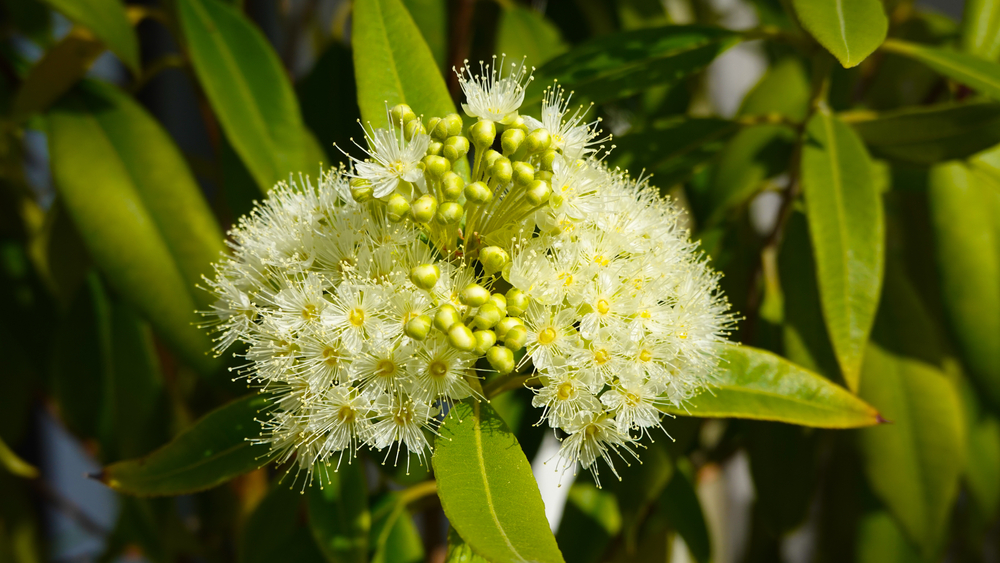
Lemon Myrtle (Backhousia citriodora) blossoms.
Queensland-based food business Figjam & Co works closely with Indigenous growers, harvesters and partners to ensure native botanicals are sourced responsibly and with cultural context intact.
Head of Strategy Jacob Davidson says native ingredients must be understood as products of place, not interchangeable flavours.
“Connection to Country is fundamental,” Davidson says. “Davidson Plum grown in Southeast Queensland is different to the same genus grown in Far North Queensland - in flavour profile, growing conditions and traditional use.”
This regional diversity is one of Queensland’s greatest strengths. From tropical rainforests to arid inland regions and coastal landscapes, the state’s botanical range is both geographically and culturally rich.
Davidson says this shift was evident during World Expo 2025 Osaka, where Queensland native botanicals were showcased as part of the state’s program.
“There was clear curiosity about where ingredients come from, how they’re produced and the cultural knowledge behind them,” he says.
Spanning food, beverages, skincare and wellness, Queensland businesses are demonstrating that native plants can deliver both cultural integrity and commercial opportunity when handled with care and respect.
For Helen Bool, native botanicals are not a trend or an ingredient choice, but the foundation of her business.
“(The brand) Helen Rose was created from my own relationship with Country and care,” she says. “Native botanicals were the starting point. Every product begins with respect for the plant, where it grows and why it has been used for generations.”
Drawing on traditional bush medicine and lived cultural knowledge, Bool’s skincare and wellness range is intentionally developed at a measured pace, prioritising ethical sourcing and long-term care over rapid scale.
“I don’t separate culture from business,” Bool says. “They are woven together. If something doesn’t sit right culturally or ethically, I don’t use it.”
That emphasis on respect for Country is echoed across the sector.
Enterprises such as MAUDU Collective, makers of Indigi Fudge, further demonstrate grounding commercial success in community-led, culturally informed approaches. Founded by Valerie Murray, they incorporate Indigenous knowledge to ensure that native botanicals are developed in ways that respect cultural integrity while creating sustainable economic opportunity.
“Native botanicals are not just ingredients - they carry cultural responsibility,” Murray says. “For us, it’s about protecting knowledge, honouring where these plants come from and making sure communities are part of the value chain as the industry grows.”
Trade and Investment Queensland supports the native botanicals sector through international engagement, export capability building and connections through their global network.
Find out how to take your business global. Get in touch with TIQ and start your export journey.